A Global Milestone for Mixel Studio
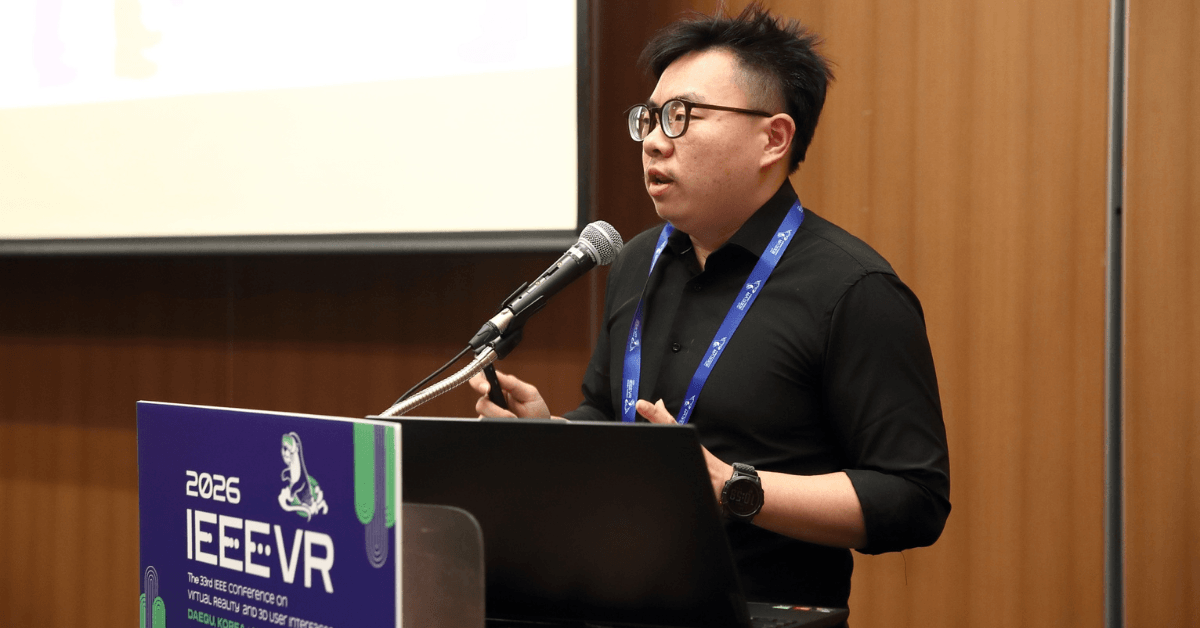
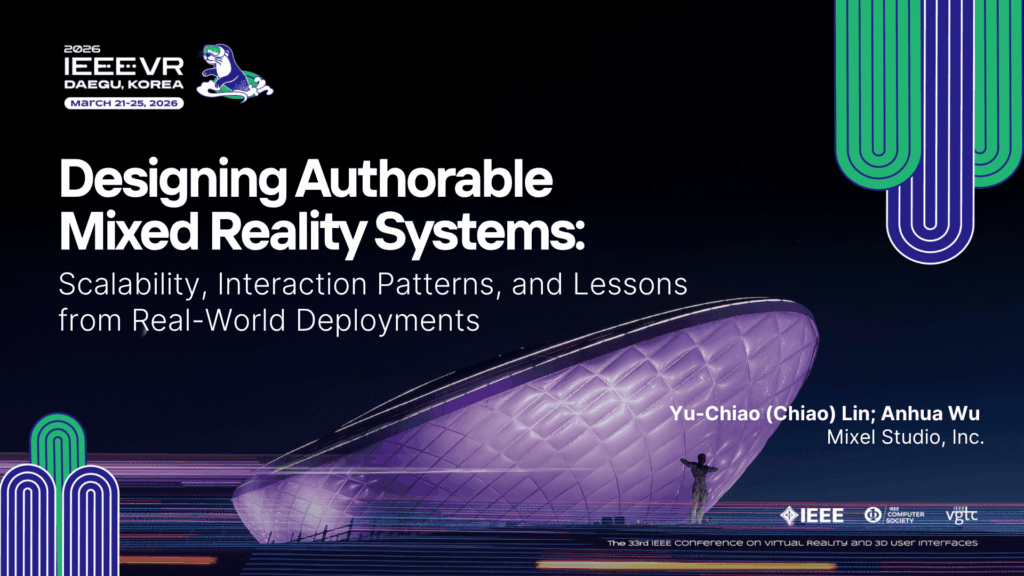
This year marked a significant milestone for Mixel Studio as our founders, Chiao Lin and Anhua Wu, was selected to lead as a tutorial instructor at IEEE VR 2026 in Daegu, Korea—one of the world’s leading conferences in virtual and augmented reality. The tutorial centered on designing authorable mixed reality systems and examined how these systems are being applied in real-world educational environments. Being selected for this role reflects not only individual recognition, but also the growing global relevance of our work in making XR more usable, scalable, and impactful.
Standing Alongside Global Leaders
What made this moment especially meaningful was the caliber of this year’s instructor lineup. Alongside experts from Google and leading institutions such as Yale University and University College London, Mixel Studio contributed to a global dialogue shaping the future of immersive technology. This positioning signals a broader shift in the field: XR is moving beyond research and experimentation into practical, scalable applications across education, workforce training, and enterprise contexts worldwide.
Bridging XR and Real-World Deployment
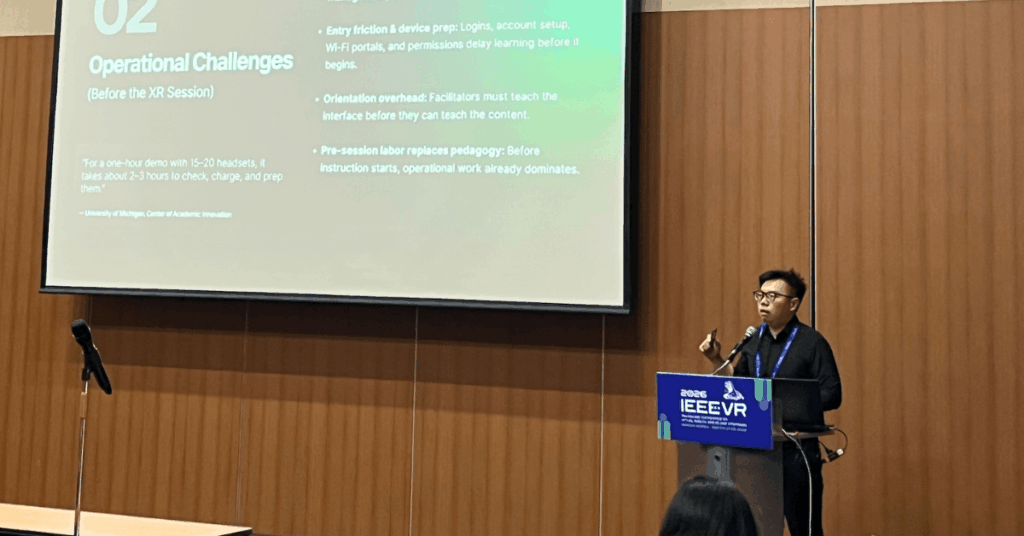
At the core of the tutorial was a focus on moving MR beyond demos into systems that work in real-world settings. Combining lectures and guided discussions, we shared lessons from designing an easy-to-use MR authoring tool for non-technical users—grounded in iterative testing and deployments across K–12 classrooms and after-school programs. A key theme was the tension between user agency and operational friction, highlighting that true scalability depends on usability and workflow, not just system performance.
We structured the session around two design directions—time-to-adapt and confidence-to-edit—demonstrated through approaches like spatial slide sequencing, anchored reference objects, template-first workflows, and lightweight web previews. The final part focused on orchestration and deployment, emphasizing shared visual grounding through synchronized session states, flexible configurations, and low-friction session entry.
Together, these insights provide practical guidance for building XR systems that can reliably scale beyond pilots into repeatable, real-world use.
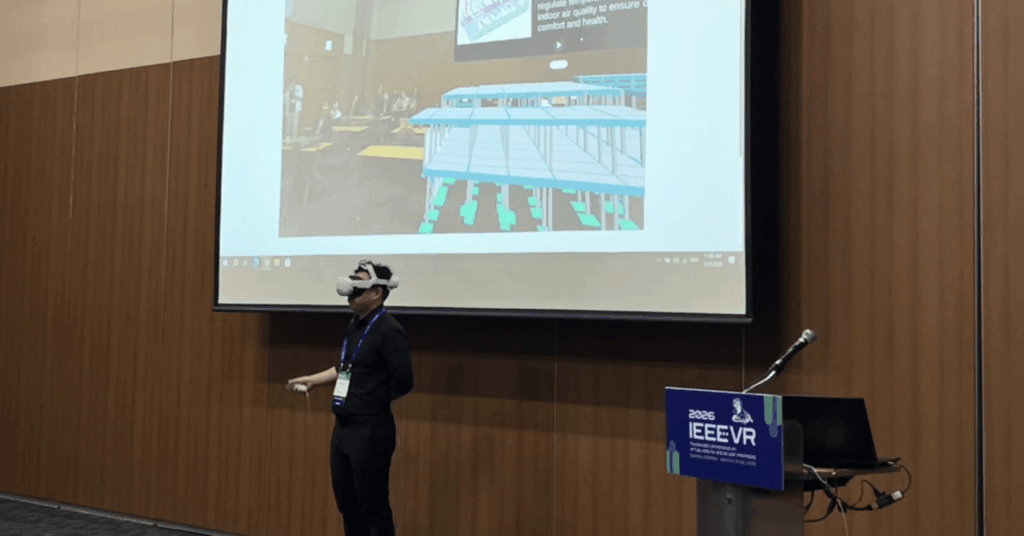
Live Demo: Connecting XR and Non-XR Audiences
To bring these ideas to life, we conducted a live demonstration using our platform, OXR. The demo showcased how a single XR session can be synchronized across devices, including headsets, laptops, and mobile devices. We highlighted how spatial perspectives are mapped and translated for participants without XR hardware, ensuring they can still follow and engage with the experience. By enabling shared visual understanding across mixed-device environments, OXR addresses one of the most important challenges in XR today: making immersive experiences accessible and functional for real-world, multi-user scenarios.
Looking Ahead: A More Accessible XR Future
As XR continues to evolve toward lighter, more accessible devices, the opportunity ahead is inherently global. Mixel Studio is focused on lowering the barriers that have historically limited adoption—empowering educators, trainers, and domain experts to create and deliver immersive content without technical overhead.
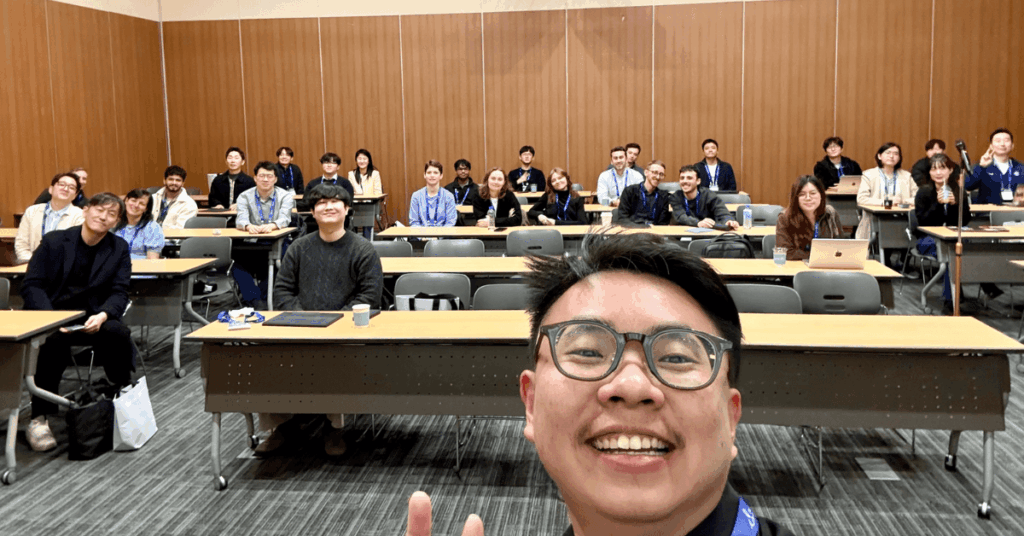
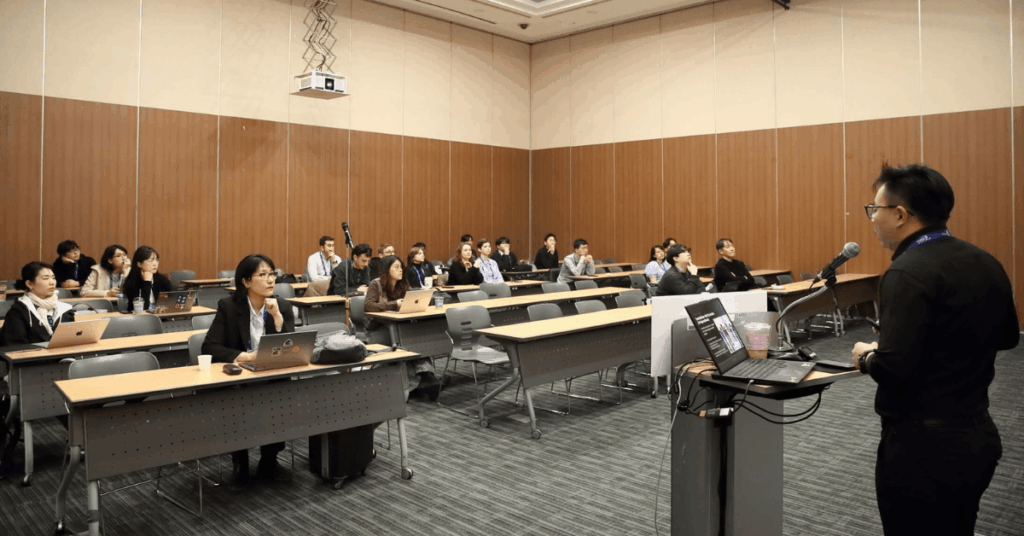
The energy in the room reinforced this direction. The session was fully attended, with more than 30 participants joining and engaging actively throughout. Attendees asked thoughtful, in-depth questions, and seeing people capture the slides and document key moments was incredibly encouraging. It was a clear signal that the conversation is shifting—from curiosity about XR to a genuine desire to apply it in real-world contexts.
Being part of IEEE VR 2026 is both a reflection of how far the field has come and a signal of what’s next: a more connected, creator-driven XR ecosystem where immersive technology becomes a practical tool for everyday learning and collaboration.